
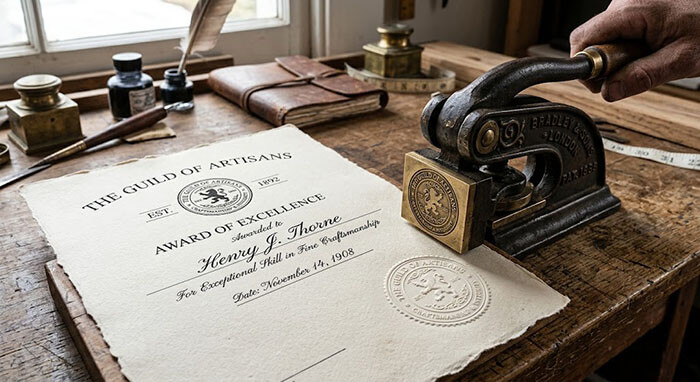
There is a distinct mechanical satisfaction in operating a heavy handheld or tabletop seal press. As you press the steel lever down, metal dies crush together under intense pressure, leaving a permanent 3D emblem raised from the surface of the sheet.
This process is known as dry embossing (or blind seal stamping).
Because it relies purely on mechanical force rather than ink or toner, dry embossing creates a permanent tactile mark that never fades, smudges, or degrades over time. At diplomafiles.com, we use heavy-gauge brass and steel dies to press crisp, structural seals into archival cardstock.
1. How Fiber Deformation Works
Paper is not a flat solid mass; it is a woven network of organic plant fibers held together by natural hydrogen bonds.
During dry embossing, the paper sheet is sandwiched between a raised male die and a matching recessed female die.
-
Pressure threshold: When pressure is applied, the paper fibers stretch beyond their elastic limit into the die cavities without tearing.
-
Permanent memory: The altered fiber structure sets into a permanent 3D shape, creating crisp light-and-shadow highlights across the raised emblem.
Unpressed Paper ──> Flat woven fibers
Under Press     ──> Fibers stretched into brass die cavities
Final Finish    ──> Permanent 3D raised seal (Zero ink needed)
2. Defeating Digital Copying with 3D Relief
Because dry embossing alters the physical geometry of the paper sheet rather than applying surface color, it offers unbeatable copy resistance:
-
Color copiers only capture 2D light reflections; they cannot capture physical depth.
-
Digital scanners flattened under glass miss the subtle side-lighting that makes embossed seals pop.
Add Physical Authority to Your Projects
Elevate your credentials with the tactile permanence of true mechanical pressing. Custom seals pressed by diplomafiles.com ensure your documents feel authentic from the very first touch.