
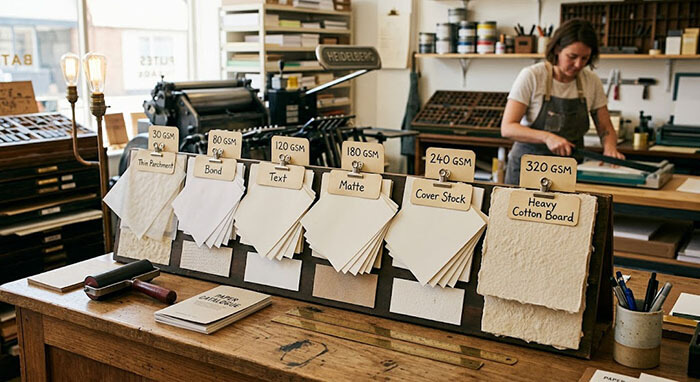
When ordering custom certificates, charters, or executive diplomas, paper selection is the single most critical factor determining the physical quality of the final piece.
However, paper specifications can be confusing. You might see a sheet listed as 300 GSM in Europe, 110 lb Cover in North America, or 14 pt in commercial printing.
Are these measurements the same? Not quite. Understanding paper weight metrics ensures your project at diplomafiles.com feels substantial and heavy—never thin or flimsy. Here is the math behind paper weight standards.
1. The Universal Metric: GSM (Grams per Square Meter)
Unlike regional system weight measurements, GSM measures the absolute density of paper by weighing a single square meter ($1\text{ m}^2$) sheet regardless of its industry cut size.
-
80–100 GSM: Standard office multipurpose printer paper. Thin, flexible, and translucent.
-
150–200 GSM: Heavy brochure paper or lightweight poster stock.
-
250–320 GSM: Heavyweight archival cardstock—the ideal standard for official diplomas, certificates, and presentation charters.
2. The Regional Equivalent Conversion Table
In North America, paper is measured by Basis Weight in Pounds (lb), which calculates the weight of 500 uncut sheets in its trade category size (Text vs. Cover).
GSM Range   US Basis Weight (Cover)   Points (pt)   Paper Feel & Flexibility
─────────────────────────────────────────────────────────────────────────────
120 GSM     32 lb Bond / 45 lb Cover  ~5 pt         Flexible & Lightweight
240 GSM     65 lb Cover               ~9 pt         Medium Stiffness Cardstock
300 GSM     110 lb Cover              ~14 pt        Heavy Archival Cotton Board (Rigid)
350 GSM     130 lb Cover              ~16 pt        Ultra-Thick Museum Board
Never Settle for Flimsy Paper
At DiplomaFiles, we cut through the confusion by printing exclusively on heavy 250 GSM to 320 GSM archival cotton cardstock. This guarantees that every document you order commands respect the moment it is handed over.