
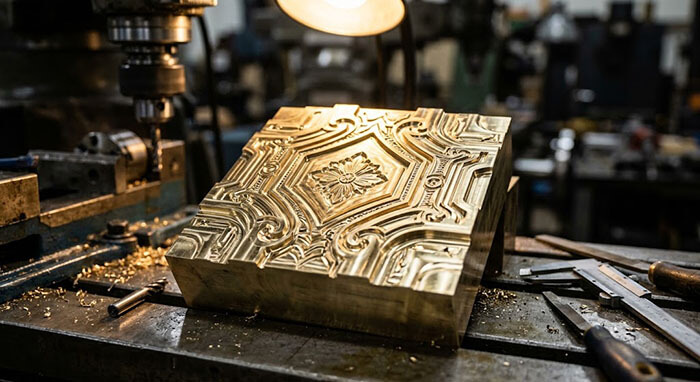
When you hold a luxury document from diplomafiles.com and admire its shimmering, multi-dimensional gold seal, you are witnessing the result of extreme mechanical pressure and thermal engineering.
However, the secret behind every pristine foil impression isn’t just the foil itself—it is the metal stamping die that presses it into the paper.
In the printing industry, not all dies are created equal. Understanding the difference between cheap photo-etched zinc plates and CNC-milled solid brass dies explains why our hot-foil seals stand in a class of their own.
1. Zinc Chemical Etching vs. CNC Solid Brass Milling
Standard commercial print shops often use chemically etched zinc or magnesium plates because they are cheap and quick to manufacture.
However, chemical acid etching has distinct limitations:
-
Shallow Edge Taper: Acid etching creates soft, sloping edges that cause thin foil lines to blur or fill in.
-
Rapid Metal Fatigue: Soft zinc plates warp under high heat and pressure, losing sharp details after just a few dozen impressions.
Zinc Acid-Etched Die  ──> Sloping Edges ──> Blurry Line Borders & Quick Metal Fatigue
CNC-Milled Brass Die  ──> Vertical Sharp Angles ──> Razor-Sharp Detail & Multi-Level 3D Relief
2. Multi-Level 3D Sculpting in Solid Brass
By using computer-guided CNC milling tools, our studio engraves solid brass blocks with sub-millimeter precision.
-
Multi-Level Sculpting: A single brass die can feature multiple depth tiers—allowing the center crest to raise up sharply while the surrounding lettering presses down cleanly.
-
Sharp Vertical Edges: Vertical sidewalls ensure that liquid adhesive foils shear cleanly along the outer perimeter of tiny text without leaving messy foil specks.
Uncompromising Tooling Standards
A great document requires master-grade tooling. Experience the razor-sharp precision of true brass-milled hot-foil pressing at diplomafiles.com.