
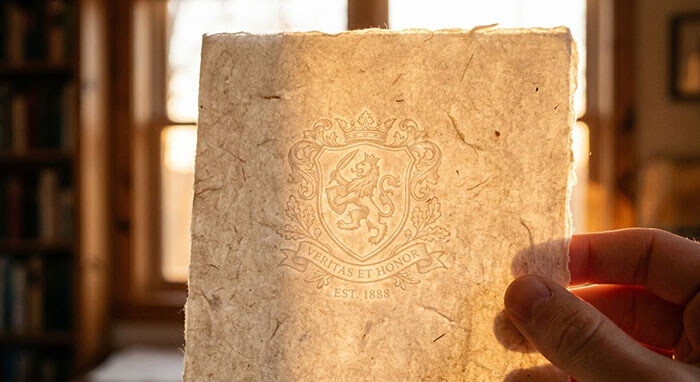
Hold a centuries-old university charter up against a window light, and you will see an ethereal image embedded deep inside the paper fibers: a glowing coat of arms, an institutional crest, or a classic paper-maker’s mark.
A true watermark is not printed on top of the sheet with ink; it is sculpted into the very density of the paper pulp while the sheet is being formed on the papermaking screen.
At diplomafiles.com, we incorporate authentic watermarked cotton stock into our custom creations. Here is how mold-made watermarks add subtle authority to your credentials.
1. The Physics of True Watermarks
A real watermark is created using a wire design wrapped around a dandy roll on a papermaking mold:
-
Light Density Areas (Translucent): The raised wire design pushes wet paper fibers aside, creating a slightly thinner layer that lets light pass through easily.
-
Dark Density Areas (Shaded): Recessed wire areas collect extra paper pulp, creating a denser layer that appears darker under backlit light.
[ Backlit Light Source ]
         │
         ├──> Thinner Fiber Area  ──> High Light Transmission (Glowing Lines)
         └──> Thicker Fiber Area  ──> Low Light Transmission  (Shaded Shadows)
2. Printed Simulated Watermarks vs. Mold-Made Watermarks
Beware of cheap digital print shops that claim to offer “watermarks” by simply printing low-opacity gray ink onto standard printer paper.
A printed simulated watermark sits flat on the surface and blocks light. In contrast, an authentic mold-made watermark is physically integrated into the sheet, responding dynamically whenever light passes through it.
Elevate Paper to Works of Art
Incorporate the subtle elegance of authentic paper watermarking into your institutional charters. Explore custom paper options at diplomafiles.com today.