
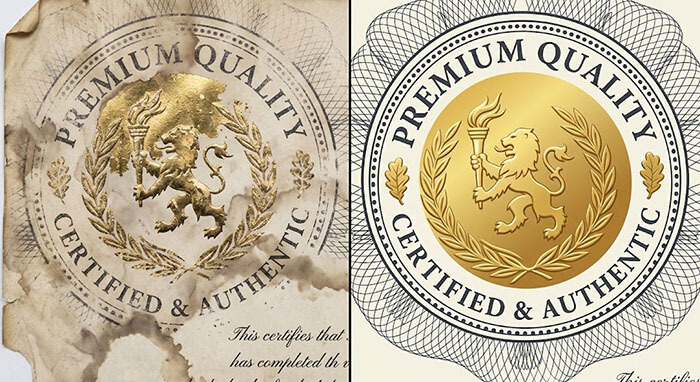
Family archives, university vaults, and historical societies often contain priceless documents that have suffered decades of wear and tear. Water stains, torn edges, faded signature inks, and yellowed paper can make historic diplomas nearly unreadable.
Simply scanning a damaged document isn’t enough—a scan merely captures the stains, tears, and fading as they are today.
At diplomafiles.com, we offer vector document restoration. By manually tracing and rebuilding the original artwork line by line, we restore historic credentials to the pristine condition they were in on the day they were first issued.
1. The Vector Restoration Workflow
Restoring a historic document requires a careful balance between preserving historical authenticity and cleaning up physical damage:
[ Water-Damaged Original ] ➔ [ High-Res Scan ] ➔ [ Manual Vector Tracing ] ➔ [ Pristine Re-Print ]
-
High-Resolution Archival Scanning: The original document is scanned in uncompressed format to capture every surviving detail.
-
Manual Node Tracing: Rather than using automated raster-to-vector tools—which create wobbly, inaccurate paths—our designers manually rebuild fonts, borders, and emblems line by line.
-
Color Correction & Stain Removal: Paper discoloration, ink bleeding, and water stains are digitally removed while preserving the original typographic layout.
2. Re-Printing on Archival Cotton Stock
Once the vector file is rebuilt, the restored artwork is re-printed onto 300 GSM 100% cotton cardstock using fade-resistant pigment inks. This ensures your restored heirloom will last for another century.
Preserve Your Family Heritage
Don’t let time destroy your historical treasures. Let the restoration specialists at diplomafiles.com breathe new life into your damaged documents today.