
Modern commercial desktop scanners can capture images at resolutions exceeding $2400\text{ DPI}$. To the untrained eye, it might seem like any printed document can be digitally duplicated with absolute fidelity.
However, optical digital sensors operate on a fixed pixel grid—a fundamental physical limitation that security printing exploits through fine-line anti-scanning patterns.
At diplomafiles.com, we design custom background line art engineered to defeat optical digitization. Here is how line geometry breaks digital scanning hardware.
1. The Physics of the Moiré Effect
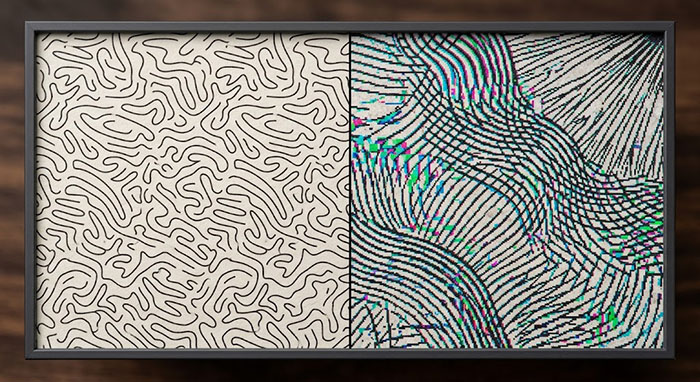
When an optical sensor attempts to sample physical line patterns that are thinner than the distance between its light sensors, an interference phenomenon known as the Moiré Effect occurs:
Physical Vector Pattern (0.05mm Lines) ──> Scanned by CCD/CMOS Pixel Grid ──> Aliasing Interference
Result ──> Distorted Wave Artifacts & Blurring (Uncopyable Document)
-
Line Density & Angle Frequency: Security borders change line angles continuously across the page, forcing scanner interpolation algorithms to generate blurry, pixelated artifacts.
-
Sub-Pixel Line Widths: Lines measuring less than $0.05\text{ mm}$ ($0.14\text{ pt}$) fall below the clean raster grid threshold of standard desktop scanners.
2. Line Art vs. Digital Halftoning
Standard home desktop printers convert continuous tones into dot clusters (halftones). Security printing uses continuous vector paths, ensuring that any scanned copy looks visibly blurred and blotchy when reprinted.
Defend Your Credentials Against Duplication
Integrate scanner-resistant vector line art into your institutional diplomas. Consult with our security design team at diplomafiles.com.