
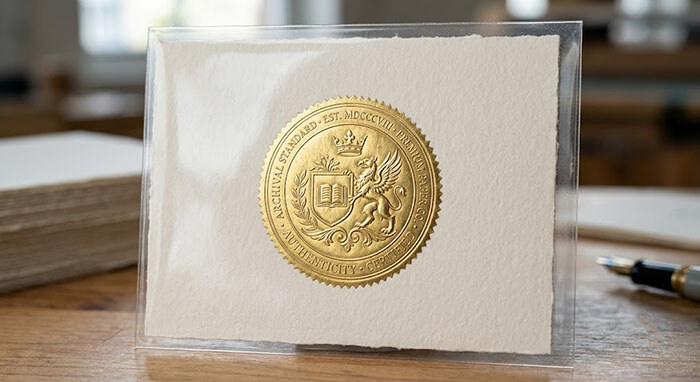
There is nothing quite like the radiant shimmer of a freshly hot-foil stamped seal. The metallic luster commands immediate attention, serving as the crown jewel of any certificate, charter, or executive award.
However, improper storage, humidity exposure, or acidic framing materials can degrade foil impressions over time—causing thin metallic flakes to lift or dulling their reflective mirror finish.
At diplomafiles.com, we use premium aluminum and brass-based foils fused under immense heat. Here is how to care for hot-foil stamped credentials so their brilliant shine lasts for generations.
1. Understanding Foil Stamping Chemistry
Unlike metallic inks, which consist of tiny metal flakes floating inside an oil or solvent binder, hot-foil stamping uses an ultra-thin multi-layer film:
-
Polyester Carrier Film: The base backing layer used during thermal pressing.
-
Release Layer: Melts under heated dies to release the metallic layer onto paper.
-
Vacuum-Metallized Aluminum: The core layer providing high mirror reflectivity.
-
Thermal Adhesive Layer: Fuses directly into the porous cotton paper fibers.
[ Heat & Pressure Applied ] ──> Thermal Adhesive Melts ──> Foil Locks INTO Paper Fibers
[ Unprotected Exposure ]    ──> High Humidity/Friction  ──> Micro-Flaking along Edges
2. Best Practices for Foil Preservation
Avoid Friction and Surface Contact
Never slide foil-stamped sheets directly against one another without tissue interlacing. Direct friction creates micro-scratches on the shiny aluminum layer.
Control Environmental Humidity
Keep framed credentials in environment-controlled rooms with relative humidity between 40% and 50%. Excess moisture softens paper fibers, weakening the bond of thermal adhesives.
Enduring Brilliance with DiplomaFiles
Protect your investment in prestige. Our precision-pressed foils at diplomafiles.com are paired with archival-grade cotton stock to ensure every metallic seal stays mirror-bright for decades.