
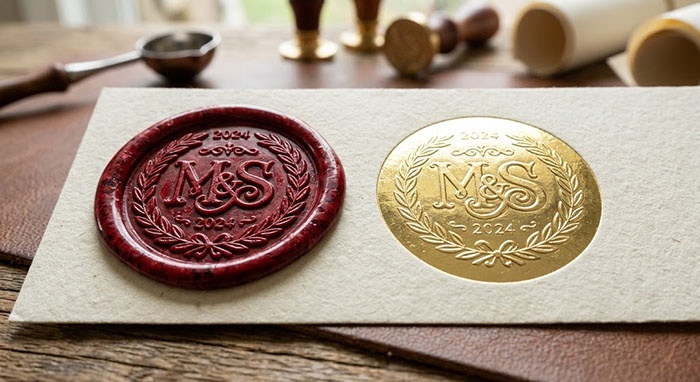
The emblem or seal at the bottom of a document is its visual focal point—the signature mark that declares authenticity and completeness.
When customizing your project at diplomafiles.com, you will often choose between two iconic 3D emblem finishes: traditional Wax Seals and metallic Hot-Foil Press Seals.
While both options convey undeniable prestige, they serve different aesthetic and functional purposes, especially when it comes to long-term framing and display. Let’s compare them side by side.
1. Traditional Wax Seals: Historic Organic Realism
Physical wax seals have been used since antiquity to bind secret correspondence and endorse royal decrees.
-
Pros: Deep 3D tactile relief, unique organic variations on every piece, and unbeatable vintage historical character.
-
Cons: Thick physical profile (up to 1/4 inch thick), which requires special deep-box shadow frames or thick inner matboard spacers so the glass does not crush the wax.
2. Hot-Foil Metallic Seals: Modern Archival Precision
Hot-foil stamping uses a heated brass die to fuse microscopic metallic foils (gold, silver, or bronze) directly into heavy paper fibers under immense pressure.
Feature            Wax Seals                       Hot-Foil Seals
─────────────────────────────────────────────────────────────────────────────
Tactile Profile    High 3D Relief (~3-5mm thick)   Debossed/Embossed (<1mm)
Framing Compatibility Requires Shadow Box Spacers  Fits All Standard Picture Frames
Reflective Finish  Matte / Glossy Wax Color    Brilliant Metallic Shimmer
Best Application   Vintage Charters & Prop Art     Modern Diplomas & Corporate Awards
Choose Your Signature Finish
Whether you prefer the dramatic 3D profile of a vintage wax impression or the brilliant metallic reflection of a hot-foil stamp, diplomafiles.com offers master-grade craftsmanship tailored to your exact display setup.